You have not added anything yet.
Subtotal0,00 €
The longer a tick stays attached, the more likely it is to transmit disease. The sooner you find it and remove it correctly, the lower the risk.
Here is where to look, how to remove it without making things worse and how to prevent ticks attaching.
Where to look
They do not jump or fly: they climb onto grass and shrubs and wait for an animal to pass. Then they seek thin skin with a good blood supply.
Inside and along the edges. One of the most common attachment sites, and one of the easiest to overlook.
Around the neck, directly under the collar. Lift it to check underneath.
Spread the toes and check the folds. This is where ticks first arrive when walking through long grass.

Thin, sheltered skin. Move the leg away from the body to see them.
The warmest area of the body, making it one of their favourites.
If your dog develops fever, loss of appetite, lethargy or bleeding in the days after having a tick, see your vet.
Crushing, burning or covering it with oil can make it regurgitate inside your pet. Remove it without heat, using tweezers.
Do not use oil, petroleum jelly, nail varnish or heat. All these methods can cause the tick to inject infected saliva just before detaching.
Both prevent new tick infestations. The difference is how long they last and which routine they suit.
Applied to the back of the neck, it protects for several weeks. An option for regular reapplication.
Put it on and forget about it for months. An option for daily countryside walks.
Duration and efficacy according to CIMAVET summaries of product characteristics 3370/3371/3372 (fipronil) and 4186 (deltamethrin). Species and transmission times according to ESCCAP guidelines. Frequently asked questions about antiparasitics.
Antiparasitics formulated as veterinary medicinal products. Available at your usual supermarket.
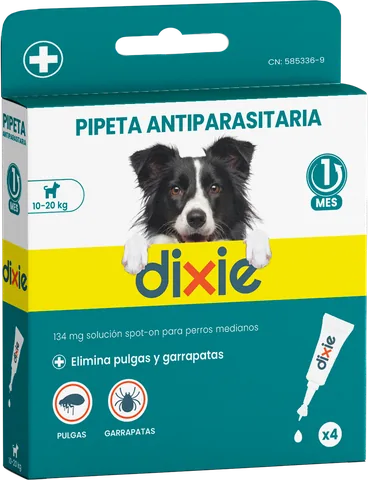 Fipronil antiparasitic spot-ons for dogs
Kills fleas and prevents ticks. Every 4 weeks.
Where to buy View product→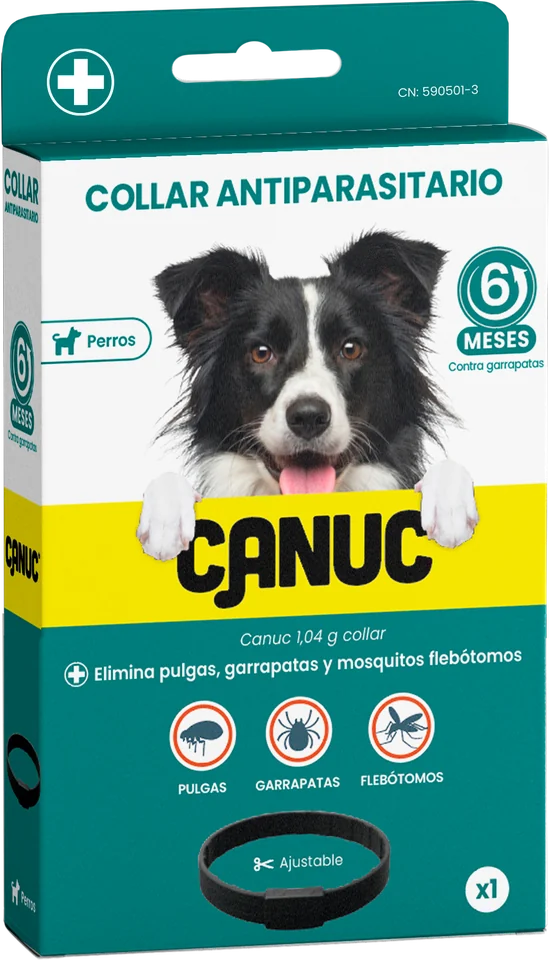
 Antiparasitic collar for dogs
Fleas, 16 weeks; ticks, 6 months; sand flies, 5.5 months.
Where to buy View product→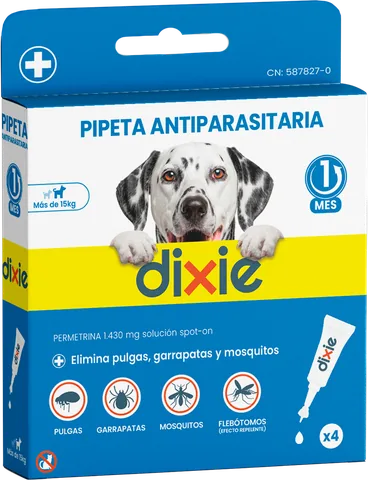 Permethrin antiparasitic spot-ons for dogs
Kills fleas and ticks, and repels sand flies for 1 week per application.
Where to buy View product→Treatment figures are taken from the CIMAVET summaries of product characteristics; species and timings are from ESCCAP.
It depends on the disease and the species. Lyme disease usually requires more than twenty-four or forty-eight hours of attachment; babesiosis can be transmitted sooner. That is why checking and acting promptly matters.
The woodland tick is most active in spring and autumn. The brown dog tick can be active all year, especially indoors. In Spain, risk is virtually continuous in areas with the highest prevalence.
Yes. The woodland tick bites dogs and people and can transmit Lyme disease and other illnesses. Check yourself too after a countryside walk.
No. Spot-on treatments containing permethrin are toxic to cats. Always use a product formulated for your pet’s species.
With the fipronil spot-on treatment, ticks already on your dog may take up to a week to die: not all die within the first 48 hours. It also prevents new infestations from day 9 to day 23 after application. If your dog already has a tick, remove it manually.